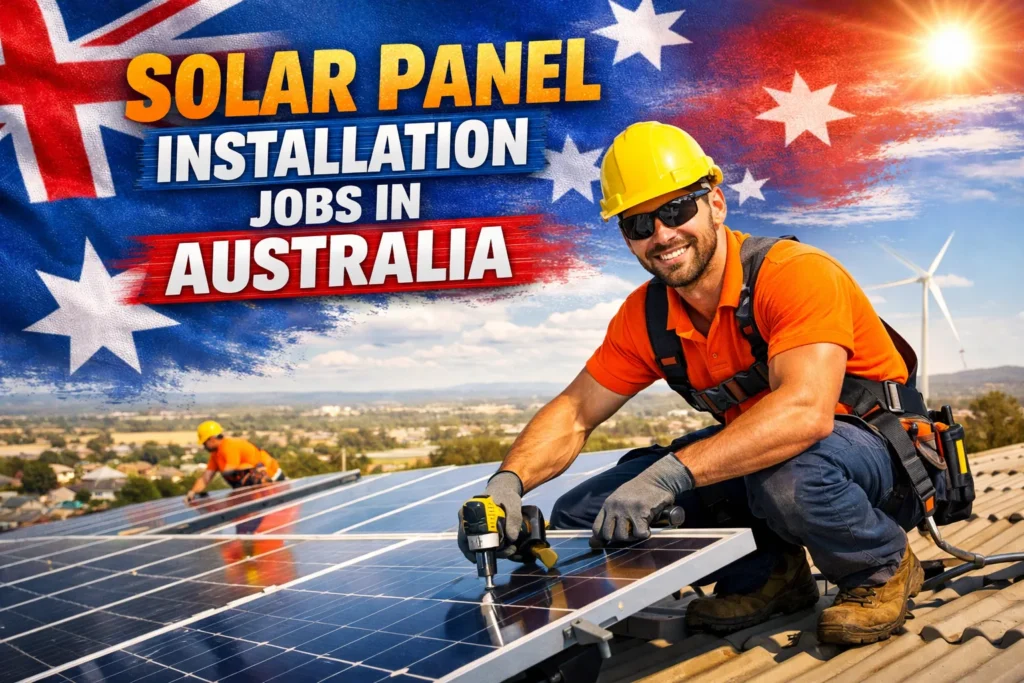
The Australian market in renewable energy is flourishing in 2026 as solar energy takes over the clean energy initiative. The expansive nature of the country, the sunshine, and the ambitious targets to reduce climate have contributed to an immense need of solar plants in the residential, business, and industrial developments. These opportunities have led to high demand of qualified personnel in the solar energy labor market – solar panel installers, technicians, and support personnel.
Because of the shortage of labor in the specialized trade there are numerous employers in Australia who are now not only prepared to sponsor the visa of foreign employees who have experience or have the training in the area of solar panel installation, electric systems and renewable energy technology. The employment offered by these jobs allows foreign workers to have stable careers, employment, and an introduction to the latest green technology.
Job Details
| Job Country | Australia |
| Job Title | Solar Panel Installation Jobs |
| Education Minimum | Not Necessary |
| Experience Minimum | 1 year |
| Language Required | English |
| Visa | Fully Sponsored |
| Minimum Salary | AUD 6,500 – 8,000 per month |
Who Are They and What Do They Do?
The solar panel installation workers work to assemble, install, secure and maintain solar photovoltaic (PV) systems on commercial solar arrays, ground mount and rooftop. They work at heights, in reading technical plans, and in ensuring that the systems are safe and electrical in their standards of work.
The solar installers in Australia are employed by renewable energy firms, electric contractors, solar distributors, and green infrastructure companies. Under visa sponsorship, foreign workers have an opportunity to work in such teams as well as contribute towards the renewable energy objectives in Australia.
Also Check: Agriculture Jobs in Netherlands with Visa Sponsorship 2026
Requirements
When applying to get visa-sponsored positions in solar installation in Australia, most of them require the following:
- Minimum age: 18 years or older
- Serious passport which has adequate validity.
- Applicant need to have applicable trade qualifications (e.g. certificates III in Electrotechnology, solar PV installation certification)
- some revel in with the installation of sun panels or electrical structures.
- Rudimentary English speaking abilities.
- Constructive criminal record and police vindication.
- Medical certificate of fitness.
- This position is an offer of employment in Australia who is ready to sponsor a work visa.
- This will satisfy your requirements much more than others and increase your probability of being chosen and allowed a visa.
Required Documents
In submitting solar installation employment opportunities under visa sponsorship, the candidate must submit following documents:
- Transferable passport and photocopies must be valid.
- Passport-size photographs
- Solar or electrical experience CV.
- Certificates and qualifications of trade.
- Licenses (professional, where necessary).
- Job offer/employment contract signed.
- Police clearance certificate.
- Medical certificate of fitness.
- Application forms of Australian work visa completed.
- Evidence of accommodation facilities (when it has been done or made separately).
- Proper and full documentation leads to easier processing and less wastage of time.
Types of Solar panel jobs in Australia
Following are the list of jobs available:
- Residential Solar Installer: Installations within roofs of homeowners, installation of solar panels, wiring and inverter systems. Duty involves customer consultations and compliance to safety.
- Commercial Solar installer technician: Serves giant solar systems of corporate buildings, industries, or governments. Needs liaison with power engineers and construction planners.
- Solar PV Electrician: Electricians with a license in solar PV systems are installers, Testers and Maintainers of electrical solar systems and installations and that they meet the standards of electrical practice.
- Solar Racking Specialist: Dwelling on the structural design which helps in the supportive framework of the solar panels, in the right positioning, clench mounting and location.
- Maintenance technician at Solar: Conducts regular maintenance, troubleshooting and system performance checks once solar installations are done.
- Solar Quality Control and Safety Officer: Checks the installations against safety requirements, building standards and industry standards. Directs and checks systems and protocols during and after installation.
- Solar Project Coordinator: Prepares the grid logistics, workers scheduling, and equipment delivery to solar projects on residential and business premises.
- Solar Site Surveyor: Inspects and evaluates the conditions, shading, roof stability and system design necessities prior to installation.
Job Duties and Roles
Use of solar panels in Australia is mainly carried out by the staff who are expected to be in charge of:
- Reading and understanding solar panel instructions and electrical plans.
- Roof or ground mount design and layouts.
- Installation of solar panels, racking system, inverter systems and wiring.
- The PV systems may be linked to electrical grids or battery systems.
- Testing of electrical connections, voltage and level of system output.
- Adhering to heights, electricity and tools safety measures.
- Electrical work, engineers, and project coordinating.
- Making quality assurance checks and system checks.
- Basic user teaching on installation to clients.
- Keeping maintenance and tools and equipment clean and looking after the site.
- These duties need physical fitness, technical expertise, and strict compliance with safety standards.
How to Apply for Solar Panel Installation Worker Jobs in Australia
Follow the step below to get the job
Step 1: Locate Sponsoring Employers
Determine the renewable energy companies and electrical contractors in Australia who have registered with the law and are in the position to employ foreign workers under visa sponsorship.
Step 2: Bring all the Documents
Gather and prepare necessary materials such as a passport, CV, trade certificates, licenses and police certificates. Make sure qualifications are well displayed.
Step 3: Solar panel jobs applications
Job Application via employer career pages, renewable energy job boards or registered recruitment agencies. Be explicit about your interest in the visa being sponsored.
Step 4: Interview and Skills Checking
Interviews may be technical interviews; or skills tests. Ready to address past installations, certifications, and safety training.
Step 5: Receive Job Offer
The successful candidates are sent an official job offer to include the position, working hours, salary, duration of the contract and the visa sponsorship.
Step 6: Visa Sponsorship by employer initiated
The employer submits the work visa sponsorship application required to the Australian Department of Home Affairs showing the requirement and meeting of labor requirements.
Step 7: Apply the Work Visa
After the process of sponsorship has been initiated, get your visa application to work in Australia with all other supporting documents to the Australian embassy or online portal.
Step 8: Police and Medical Checks
All necessary forms of medical checks done and updated police clearance certificates produced on demand.
Step 9: Visa Application and Travelling Preparations
When it does, get yourself a visa, get the plans to travel, and get ready to move to Australia.
Step 10: Arrival and Begin Work
On arrival, do the employer orientation and registration process and commence employment under the Australian labour laws and safety regulation.
Salary Expectations
By the year 2026, the workers installing solar panels in Australia would find themselves in a position to receive good competition remuneration, which is based on their technical prowess and trade qualification. Entry-level installers normally receive a pay of between AUD 28 and AUD 34 an hour based on location and employer although monthly payment usually lifts between AUD 4,500 and AUD 6,000 when working full-time. Skilled professionals who possess advanced certification, electrical license or project coordination are likely to obtain a higher salary which usually goes to AUD 6,500-8,000 per month.
Advantages of Working in Australia
- Australian residence permit and work visa, legal.
- Labor law: A right to access organized labour protection.
- Regular job with the development of the renewable energy industry.
- Skills training and certification upgrading opportunities.
- Health care services and social benefits.
- Contact with the latest sustainable technologies.
- Practice of work in foreign technical and engineering equipment teams.
- Professional networking and career advancement.
- Possible possibilities to get permanent residence.
- Relocation and accommodation assistance of certain agreements.
Useful Tips for Applicants
- Get Any Of your Solar, electrical or technical training on yourCV.
- Make sure that trade certificates and licenses are displayed in an open manner.
- Practical examples prepare one in technical interviews.
- Confirm employer bid before taking in visa sponsorship.
- Master simple communication English at work.
- Ensure that you have qualifications that are in accordance with Australian electrical standards.
- Have police clearance and medical certificates in check.
- Adhere to the safety requirements when handling the practice.
- Do not use unlicensed recruitment agents or so called agents who may demand fees.
- Keep a close agent on visa expiry and renewal days.
Reasons of Visa Rejection
- Defective or incomplete documentation.
- Employers must not be empowered to sponsor foreign workers.
- Export certificates below Australian standard.
- Health checks or medical fitness problems are not complete.
- Police missing or a criminal background.
- Distorted or fraudulent applications.
- Job offer does not coincide with the visa category requirements.
- Late/ missed application of visa.
- There have been immigration offenses or visa abuses in the past.
- Failure to exhibit the needed job competencies.
Top Websites
FAQ’s
Are there particular certifications required in the work of installing solar panels?
Yes. Electrotechnology Certificate III or solar PV installation certification Trade qualifications are also quite beneficial and generally necessary to fulfill the employer as well as the visa eligibility criteria.
Can I be an installer of solar without experience in electricity?
In Australia, entry-level work can be accommodated with simple training helpers in place of licensed electricians or expert installers because of the safety and compliance regulations.
Does Australia sponsor foreign solar workers in 2026?
Yes. The positions available in the Australian market include the sponsorship of visas of skilled solar panel installers and technicians to enable the expansion of the projects because of the demand of this kind of energy.
May I have family members accompanying me on a sponsored visa?
Yes, family members, including spouses or dependents, can be added under a particular type of visa, provided there is a minimum income level and a select of Section 22.
Do solar installers receive accommodation by employers?
There are employers that can also cover relocation and pay accommodation especially in the case of regional or remote work in the project though, under different contracts.
Will the experience in foreign countries guide me to secure a solar job in Australia?
Yes. On-the-job experience, certification, and the paper-trailed experience in other countries in your project makes your application and competitiveness to secure sponsorship.
What are the safety requirements on solar installations?
Some safety training protocols provided are working at heights, electrical safety standards, and use of personal protection equipment and also hazard awareness relating to the behavior of solar installation work.
Sum Up
Installation of solar panels in Australia under the visa sponsorship in the year 2026 will offer good career opportunities to the foreign employees in the country to pursue legal work, technical development and involvement in the renewable energy revolution. Having a well-defined eligibility process, registered procedures of application, and various vacancies, aspiring candidates will have a chance to obtain sponsored opportunities and help to achieve the targets of clean energy in Australia as well as develop their rewarding careers in a rapidly developing sector.
Leave a Reply